
"What's the per-board cost?" is the first question every procurement manager asks — and the one that takes the longest to answer accurately because PCB assembly pricing is not a single number. It's a composite of seven distinct cost categories, each driven by different factors, each scaling differently with volume, and each varying significantly between manufacturers.
This guide provides a transparent breakdown of every cost element in PCB assembly, using real pricing ranges from our Shenzhen-based production lines as a reference point. The numbers are based on Q3 2026 market conditions and reflect the cost structure of a certified, mid-volume manufacturer — not a two-person prototype shop or a Tier-1 factory running 100,000-unit orders. Your final quote will depend on your specific design, but understanding the cost architecture means you can evaluate quotes intelligently rather than comparing bottom-line numbers that may include or exclude different cost elements.
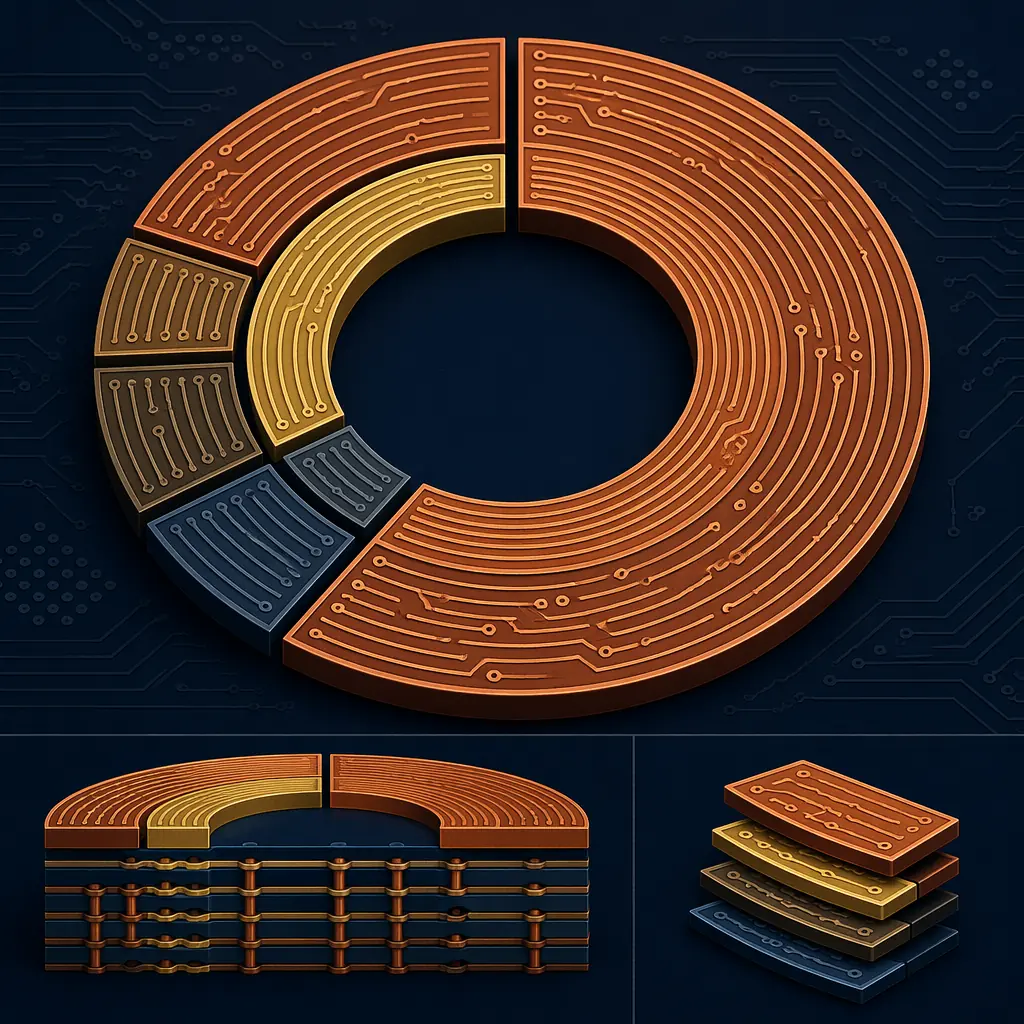
The Seven Cost Components of PCB Assembly
Every PCB assembly quote can be decomposed into these seven categories. Understanding how each one scales — with volume, complexity, and component choices — is the difference between an accurate budget and an expensive surprise three months into production.
| # | Cost Category | Typical Share of Total | Scales With |
|---|---|---|---|
| 1 | Setup & NRE (Non-Recurring Engineering) | 5–15% (batch 1), <1% (repeat orders) | Amortized over volume |
| 2 | Stencil Tooling | 2–5% | One-time; reusable for ~10,000 prints |
| 3 | Component Cost (BOM) | 50–70% | Unit volume, distributor tier |
| 4 | SMT Assembly Labor | 10–20% | Number of SMD pads, volume |
| 5 | Through-Hole / Mixed Assembly | 5–15% | Number of THT joints, manual vs selective |
| 6 | Testing & Inspection | 3–8% | Test coverage depth, Class level |
| 7 | Packaging, Logistics, Overhead | 3–5% | Board size, destination, volume |
1. Setup & NRE: What You're Really Paying For
Setup costs cover everything that happens before the first board enters the pick-and-place machine: programming the placement file from your CAD data (centroid file + BOM), configuring feeder assignments, creating the reflow profile, performing first-article inspection, and generating the production documentation package. These are one-time costs per production run — you pay them again only if you revise the design or start a new production batch after a significant gap.
Typical NRE range: $150–$500 per design for a professional assembly house. Below $100, the manufacturer is likely skipping steps — probably the reflow profile optimization and first-article documentation — that you'll pay for later in yield issues. Above $500 suggests either an unusually complex board (500+ unique BOM lines, double-sided with mixed technology) or a manufacturer pricing NRE as a profit center rather than a cost-recovery line item.
Amortization reality: On a 100-unit prototype run, $300 NRE adds $3.00/board. On a 5,000-unit production run, it adds $0.06/board — effectively zero. This is why turnkey assembly with a single partner from prototype through production delivers lower total cost than switching manufacturers between phases: you pay NRE once instead of twice (or more).
Red Flag: "No Setup Fee"
A manufacturer advertising zero setup fees is not absorbing the cost — they're hiding it in the per-unit assembly price, which means you're paying amortized NRE on every order including repeats where the setup work was already done. Legitimate manufacturers separate NRE from recurring cost because they're different cost drivers and scale differently.
2. Stencil Tooling: The $80–200 Item That Controls Your Yield
The solder paste stencil is a laser-cut stainless steel foil (typically 0.10–0.15 mm thick) with apertures corresponding to every SMD pad on your board. It's the single most important tooling item in SMT assembly — stencil quality directly determines paste deposit consistency, which directly determines solder joint quality.
A standard laser-cut stencil for a board up to 400 × 300 mm costs $80–$150. Add $30–$60 for nano-coating (a fluoropolymer treatment that reduces paste sticking to the stencil walls, improving release for fine-pitch apertures below 0.5 mm). Add $20–$40 for a framed stencil (required for automated printers; frameless stencils can be used on manual/semi-auto printers but introduce alignment variability).
A quality stencil lasts approximately 10,000 print cycles before aperture wear begins to affect paste volume consistency. For most mid-volume programs (500–5,000 units per run), that's 2–20 runs before replacement. Budget one stencil per 10,000 boards and include stencil replacement in your production planning timeline — it takes 2–3 days to fabricate a new one.
3. Component Cost (BOM): The Big Number
Components typically represent 50–70% of the total assembly cost — more than labor, NRE, testing, and overhead combined. Understanding how component pricing works is the single most effective way to control your total assembly spend.
Distribution tiers matter enormously. A microcontroller that costs $3.50 at 100-unit quantity on Digi-Key may cost $2.10 at 5,000-unit quantity through an authorized distributor's volume pricing program. The difference — $1.40 per board — on a 5,000-unit run is $7,000 saved on one component alone. A manufacturer with established distributor relationships and consolidated purchasing across multiple client programs can often access tier pricing that an individual company ordering their own components cannot.
| Component Category | Typical Cost Range (per unit) | Cost Driver |
|---|---|---|
| Passives (0402–1206 R/C) | $0.001–0.01 | Volume, reel quantity |
| Standard ICs (op-amps, regulators, logic) | $0.15–1.50 | Package, brand, volume |
| Microcontrollers (ARM, RISC-V) | $1.50–12.00 | Flash/RAM size, brand, distribution tier |
| Connectors (board-to-board, I/O) | $0.30–8.00 | Pin count, brand, rated cycles |
| Power components (MOSFETs, DC-DC converters) | $0.40–6.00 | Current rating, efficiency, package |
| Sensors (temp, IMU, pressure) | $0.80–15.00 | Accuracy, calibration, interface |
| Wireless modules (BLE, Wi-Fi, LoRa) | $2.50–18.00 | Certification status, range, brand |
The "design-for-cost" opportunity: Choosing a $1.80 op-amp instead of a $2.40 op-amp with identical specs but a different brand saves $0.60 per board — $3,000 on a 5,000-unit run. Across a BOM with 80 unique line items, these small decisions compound. This is where a manufacturer's DFM review process that includes BOM cost optimization — not just assembly compatibility — adds direct dollar value. At Uppcba, our engineering team flags BOM alternatives during DFM review that typically reduce component cost by 8–15% without changing functionality.
4. SMT Assembly Labor: The Per-Joint Economics
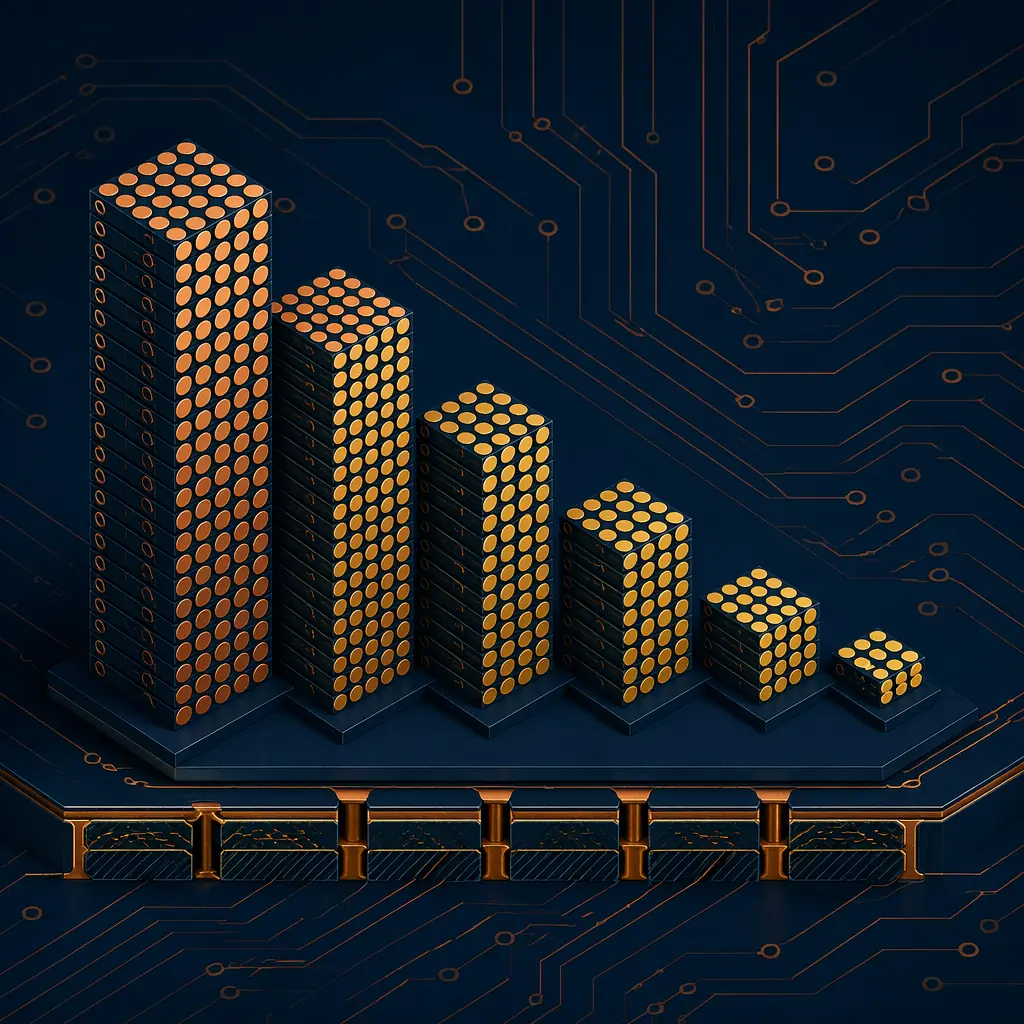
SMT assembly cost is fundamentally a function of the number of solder joints on your board — each SMD pad is one joint. The industry prices SMT assembly by the pad (also called a "placement" or "joint"), and the rate varies with volume.
Per-pad pricing ranges (Shenzhen mid-volume, Q3 2026):
| Volume (units per run) | Per-Pad Rate (USD) | Per-Pad Rate (CNY) |
|---|---|---|
| 5–50 (prototype) | $0.008–0.015 | ¥0.06–0.11 |
| 50–500 | $0.005–0.008 | ¥0.04–0.06 |
| 500–5,000 | $0.003–0.005 | ¥0.02–0.04 |
| 5,000–50,000 | $0.0015–0.003 | ¥0.01–0.02 |
Real example: A board with 200 SMD components averaging 4 pads each = 800 SMD pads. At 500 units (the midpoint of the 500–5,000 tier), SMT labor = 800 × $0.004 × 500 = $1,600, or $3.20 per board. At 5,000 units, the per-pad rate drops to $0.003, and SMT labor = 800 × $0.003 × 5,000 = $12,000, or $2.40 per board. The volume discount on labor alone saves $0.80/board — and that's before component cost volume discounts.
Example: 800 pads × $0.004 × 500 units = $1,600
Where per-pad pricing breaks down: For boards with very high pad counts (>5,000 SMD pads, typical of dense server motherboards or FPGA carrier boards), the per-pad model can overstate cost because high pad density means high component density, and the pick-and-place machine places more components per panel cycle. Reputable manufacturers will cap the per-pad calculation at a reasonable level or switch to a machine-time model for these outliers. If a quote on a 4,000-pad board looks $4–6/board higher than expected, ask whether the per-pad rate has been capped.
5. Through-Hole and Mixed Assembly: The Manual Labor Multiplier
Through-hole assembly is where labor cost becomes visible in the quote. While SMT is almost entirely automated — the pick-and-place machine places 40,000–75,000 components per hour — through-hole components require either wave soldering (automated but with fixturing cost) or manual soldering (labor-intensive).
Wave soldering: $0.02–0.04 per THT joint, plus a one-time wave solder pallet/fixture cost of $150–$400 per board design. The fixture masks areas of the board where SMT components would be damaged by molten solder contact, and it's a per-design cost — you pay it once, and it lasts for the life of the program. Wave soldering makes economic sense above roughly 200 boards per run, where the fixture cost is well amortized.
Selective soldering: $0.03–0.06 per THT joint, no fixture required. Selective soldering uses a programmable nozzle that solders individual through-hole joints with precise control, avoiding the masking requirements of wave soldering. It's the go-to choice for mixed-technology boards where SMT components are already placed on both sides and wave soldering would require extensive masking. For a deeper comparison of when each process makes sense, see our SMT vs Through-Hole vs Mixed Assembly guide.
| Method | Cost Per Joint | Setup Cost | Best For |
|---|---|---|---|
| Wave soldering | $0.02–0.04 | $150–400 (fixture) | 200+ boards/run, high THT count |
| Selective soldering | $0.03–0.06 | $0 (no fixture) | Mixed-technology boards, low–medium volume |
| Manual soldering | $0.05–0.12 | $0 | Prototype, <50 boards, odd-form components |
6. Testing & Inspection: The Cost of Not Testing Is Higher
Testing cost varies more than any other assembly cost category because "tested" means vastly different things to different manufacturers. Understanding what you're paying for — and what skipping it costs — is essential.
| Test Type | Cost Per Board | What It Catches | What It Misses |
|---|---|---|---|
| Visual inspection only | $0.05–0.15 | Gross defects: missing components, tombstoning, bridging visible to naked eye | Micro-cracks, hidden BGA joints, intermittent connections, polarity (on unmarked parts), cold joints |
| AOI (Automated Optical) | $0.10–0.30 | Solder volume, bridging, offset, tombstoning, missing passives, polarity (if marked) | BGA/QFN hidden joints, joint integrity below surface, electrical function |
| AOI + X-ray | $0.30–0.80 | AOI coverage + BGA voiding, hidden joint integrity, QFN thermal pad solder coverage | Electrical function, component authenticity, parametric performance |
| ICT (In-Circuit Test) | $0.50–2.00 + $2,000–8,000 fixture | Component values, opens/shorts, polarity, basic function | Functional performance, firmware issues, timing-dependent faults |
| FCT (Functional Test) | $1.00–5.00 + $3,000–15,000 fixture | Full system function, calibration, performance specs | Intermittent faults, environmental stress failures |
As a procurement decision rule: every dollar saved on testing is borrowed against the cost of field failures and rework. The economics are brutal: catching a solder defect at AOI costs ~$0.20. Catching it at functional test costs ~$3.00–5.00 (diagnosis + rework labor). Catching it in the field costs $50–500+ (return shipping, diagnosis, rework or replacement, customer goodwill). The test investment pays for itself at the first defect caught — which, on a board with 800 joints and a 99.7% first-pass yield rate (Uppcba's average), means roughly 2.4 defects per board that need catching somewhere.

7. Packaging, Logistics, and Hidden Costs
The costs that don't appear on the assembly line item but show up on the final invoice:
ESD packaging: $0.10–0.50 per board depending on board size and whether individual ESD bags or multi-board trays are used. Not optional — shipping assembled PCBs without ESD protection is asking for latent damage that manifests as field failures.
Shipping: Air freight from Shenzhen to North America runs $4–8/kg for consolidated freight (3–7 day) and $8–15/kg for express (2–3 day, DHL/FedEx). A typical assembled PCB weighs 50–200g. Sea freight is $0.50–1.50/kg but takes 25–35 days — viable for production volumes where schedule is predictable. For tight lead time situations, budget express shipping as a line item from the start rather than discovering the cost after the boards are assembled.
Customs and duties: Assembled PCBs typically fall under HTS code 8473.30 (parts and accessories of automatic data processing machines) or 8534.00 (printed circuits) depending on the customs classification. Duty rates for PCBs imported into the US from China currently range from 0% to 25% depending on the specific HTS code and current trade policy. Your freight forwarder or customs broker should provide the applicable rate before you commit to a production order.
Complete Cost Example: A Real-World Build
To make this concrete, here's the cost breakdown for a representative mid-complexity board assembled at Uppcba's Shenzhen facility, Q3 2026 pricing:
| Board Specs | Detail |
|---|---|
| Board dimensions | 100 × 80 mm, 4-layer, ENIG finish |
| SMD component count | 85 unique BOM lines, 320 total placements, ~1,250 SMD pads |
| THT component count | 3 connectors, 18 pins total — selective soldering |
| Complexity | 1× 0.5mm pitch QFN, 2× 0603 arrays, rest 0805/SOIC |
| Test plan | AOI 100% + functional test (customer-provided test procedure) |
| Cost Category | 500 Units | Per Board | 5,000 Units | Per Board |
|---|---|---|---|---|
| Setup & NRE | $300 | $0.60 | $300 | $0.06 |
| Stencil tooling | $120 | $0.24 | $120 | $0.02 |
| Component cost (BOM) | $10,500 | $21.00 | $90,000 | $18.00 |
| SMT assembly (1,250 pads @ tier rate) | $2,500 | $5.00 | $18,750 | $3.75 |
| THT selective soldering (18 pins) | $450 | $0.90 | $3,600 | $0.72 |
| AOI inspection | $100 | $0.20 | $750 | $0.15 |
| Functional test setup | $4,000 | — (amortize) | $4,000 | — (amortize) |
| Functional test per board | $875 | $1.75 | $6,250 | $1.25 |
| Packaging & logistics (est.) | $350 | $0.70 | $2,500 | $0.50 |
| Total (excl. FCT fixture) | $14,995 | $29.99 | $118,020 | $23.60 |
| FCT fixture (amortized over 2 years / 10k units) | $4,000 | (+$0.40/board) | $4,000 | (+$0.40/board) |
Key Takeaways from the Example
Volume effect: Moving from 500 to 5,000 units reduces per-board cost by 21% ($30 → $23.60), driven by component volume discounts and per-pad rate tier improvements.
Components dominate: At both volumes, the BOM is ~70% of total cost. Component sourcing strategy — turnkey vs consigned, distributor relationships, alternative part identification — has more impact on your total spend than any other decision.
NRE vanishes at volume: The $300 setup fee is $0.60/board at 500 units — noticeable but not dominant. At 5,000 units it's $0.06/board — a rounding error. This is why evaluating a manufacturing partner on NRE cost alone is a mistake; what matters is the recurring cost structure.
How to Get an Accurate Quote (and Spot an Inflated One)
Every manufacturer's quote format is different, which makes direct comparison difficult. These five checks help you normalize quotes and identify which cost elements are being padded or hidden:
| # | Check | What to Look For |
|---|---|---|
| 1 | Are NRE and recurring costs separated? | If setup is "included" in the per-board price, you're paying it on every repeat order. |
| 2 | Is the per-pad rate stated explicitly? | If not, ask. A rate above $0.008/pad at 500+ units is above market for Shenzhen mid-volume. |
| 3 | Are component costs at market + markup or market? | A markup of 5–15% on components is standard for turnkey assembly (covers sourcing labor, inventory carrying cost, warranty on supplied parts). Above 20% is padding. |
| 4 | Is testing itemized by type? | "Testing included" without specifying AOI, X-ray, ICT, or functional test means visual inspection only — or worse, no inspection and they're calling it "tested." |
| 5 | Is there a minimum lot charge? | Many manufacturers have a minimum order value ($300–800) below which they won't accept an order. This is normal — nobody makes money assembling 5 boards — but it should be stated upfront. |
The Cost You Can't See: Process Discipline
Two manufacturers quoting the same per-pad rate can produce radically different total costs over a program's life. The difference is process discipline — the difference between a manufacturer that delivers 99.7% first-pass yield with documented process control and one that delivers 97% yield with inspection-based quality management. A 2.7 percentage point yield gap on a 5,000-unit program with 1,250 pads per board means 168,750 more opportunities for defects — and roughly 170 additional boards requiring rework. At an average rework cost of $5 per board (diagnosis + labor), that's $850 in hidden cost that the procurement spreadsheet never shows you.
This is the real argument for evaluating manufacturing partners on process capability rather than quote price alone. A manufacturer with SPC data for solder paste print thickness, reflow profile consistency, and placement accuracy — and who shares that data — is demonstrating the process discipline that keeps your actual cost close to the quoted cost. A manufacturer who can't or won't share process data is telling you that they don't measure what they don't want you to see, and the gap between quoted and actual cost will be larger than the per-pad rate difference suggests.